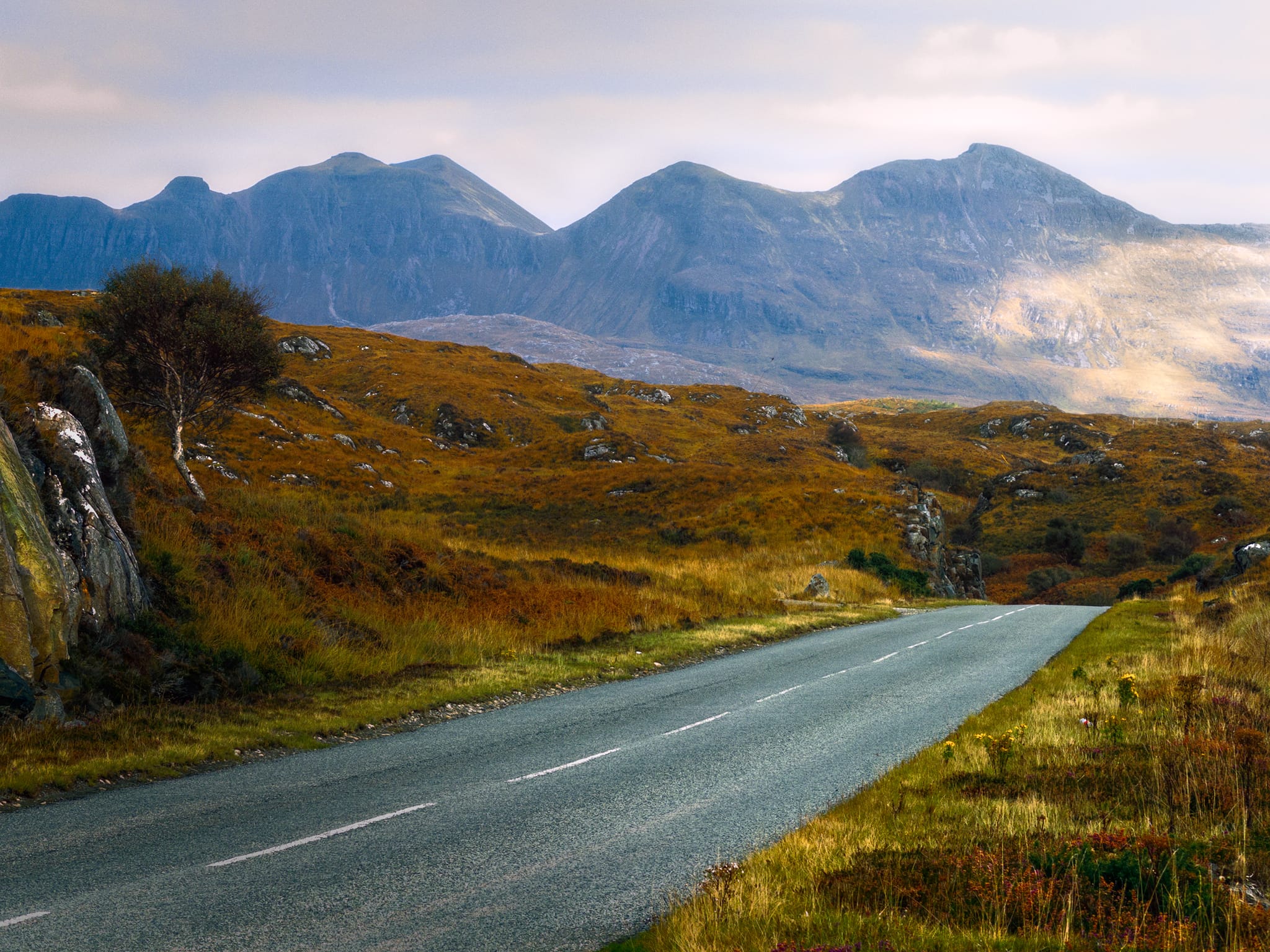
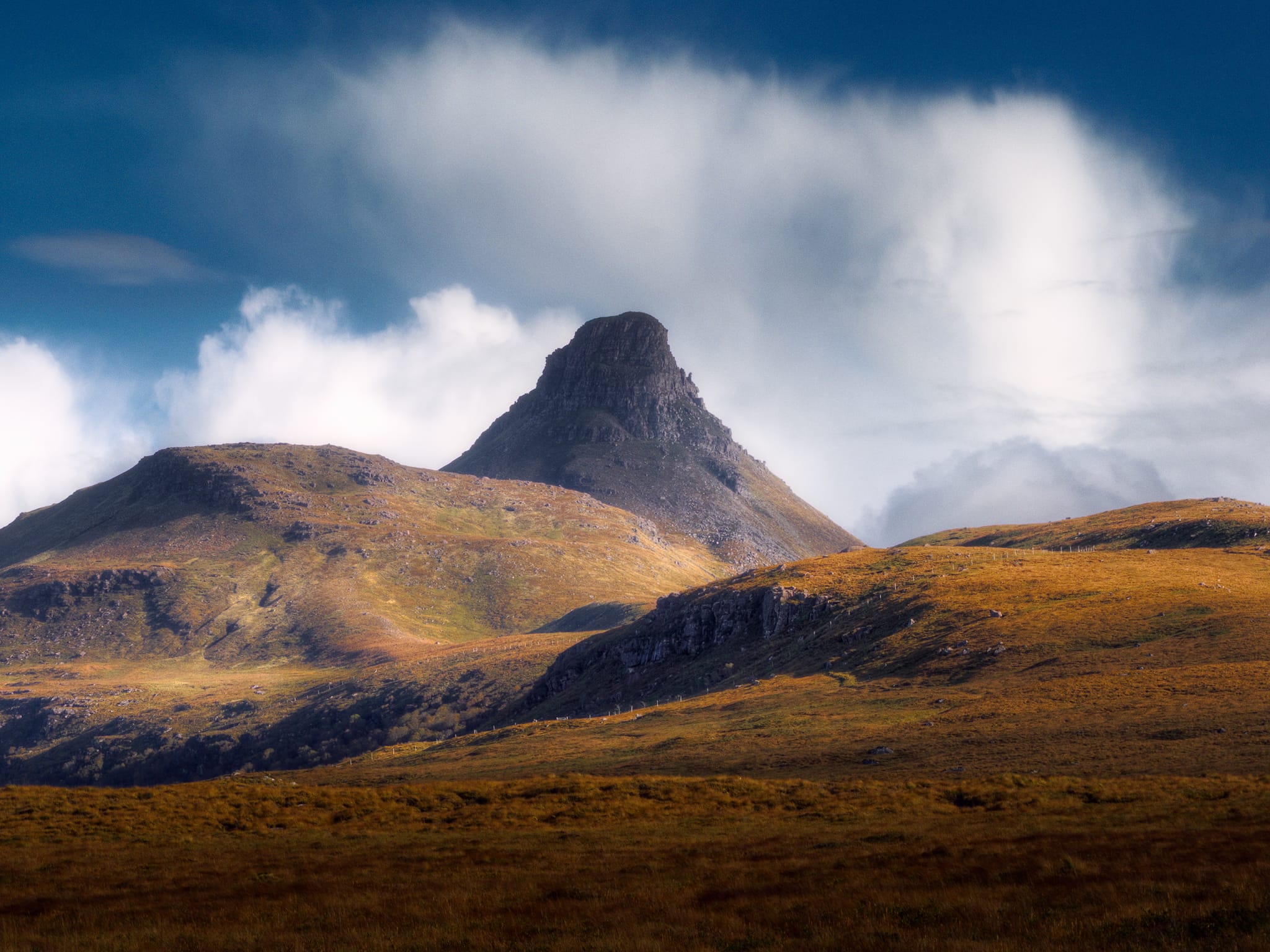
The Assynt and Coigach area is not just about mountains.
The far northwest of Scotland is also known for absolutely stunning beaches: pristine sand, turquoise water, otherworldly geology and, of course, incredible views.
Achnahaird Bay is one of those places. Visiting is thankfully accessible, with dedicated parking and simple walk along the clifftops down to the bay.
The shoreline around Achnahaird Bay has a geological history stretching back roughly a billion years. Much of the bedrock is ancient Torridonian sandstone, formed from sediments deposited by rivers in a landscape very different from the Scotland we know today. Over immense stretches of time, those sediments hardened into stone, fractured and became exposed, and were eventually shaped by the relentless Atlantic. The result is a wonderfully rugged coastline of towering rock formations, deep clefts, weathered overhangs, and secluded pockets of sand.
Some of the sandstone still preserves the sloping layers left by ancient currents. There’s something humbling about wandering among these formations and photographing details shaped over hundreds of millions of years.
Achnahaird, Coigach, Scotland, Autumn © 2026 by Ian Cylkowski is licensed under CC BY-NC-SA 4.0.
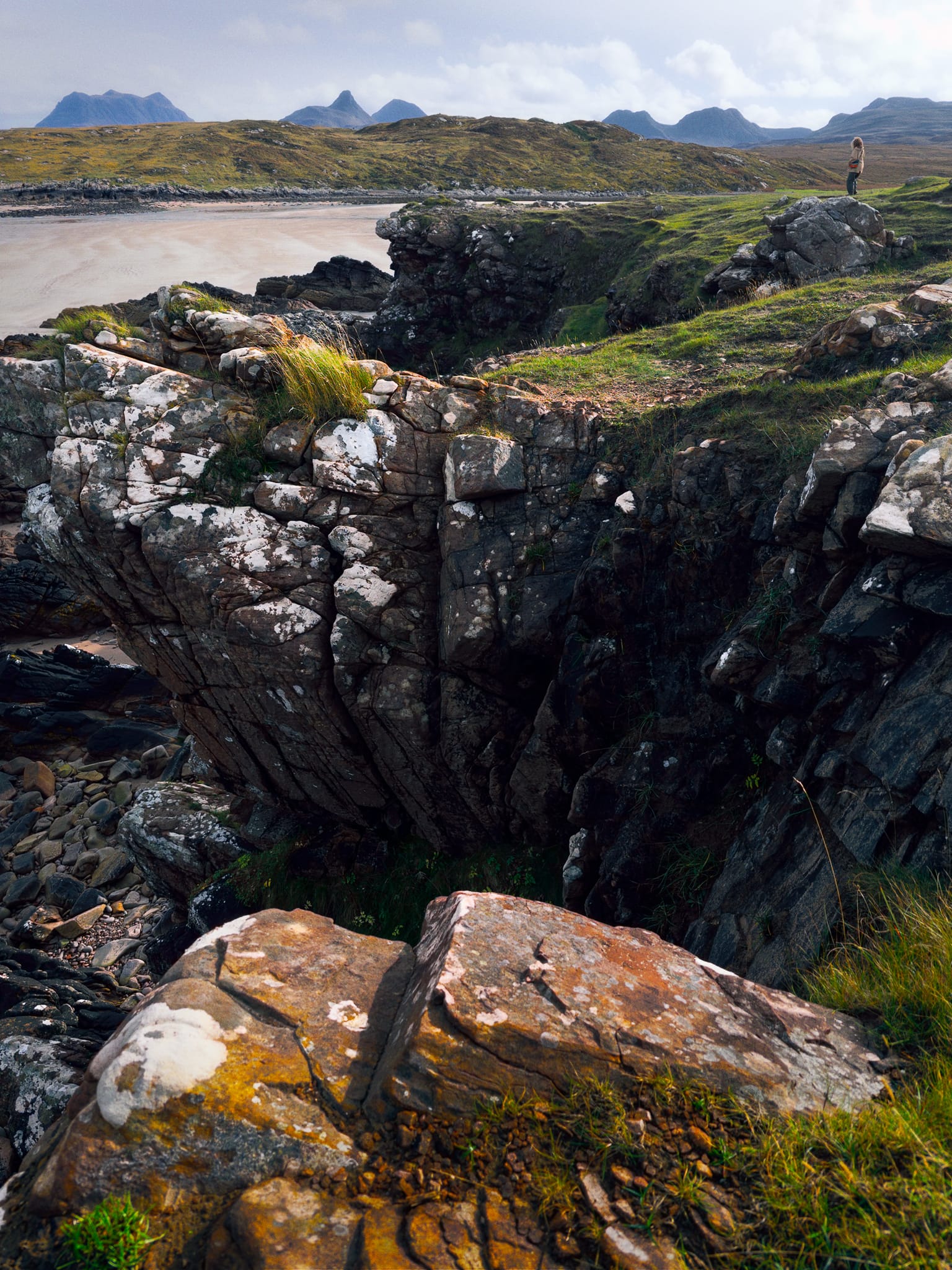
The way towards the bay takes you along this clifftop that makes up for lack of height with fascinating shapes, textures, and formations. It’s also along the clifftop that you can see some of the area’s famous mountains rising above the landscape in the distance. From left to right: Cùl Mòr, Stac Pollaidh, Cùl Beag, Beinn an Eòin, Ben More Coigach and Sgùrr an Fhidhleir, and Speireag.
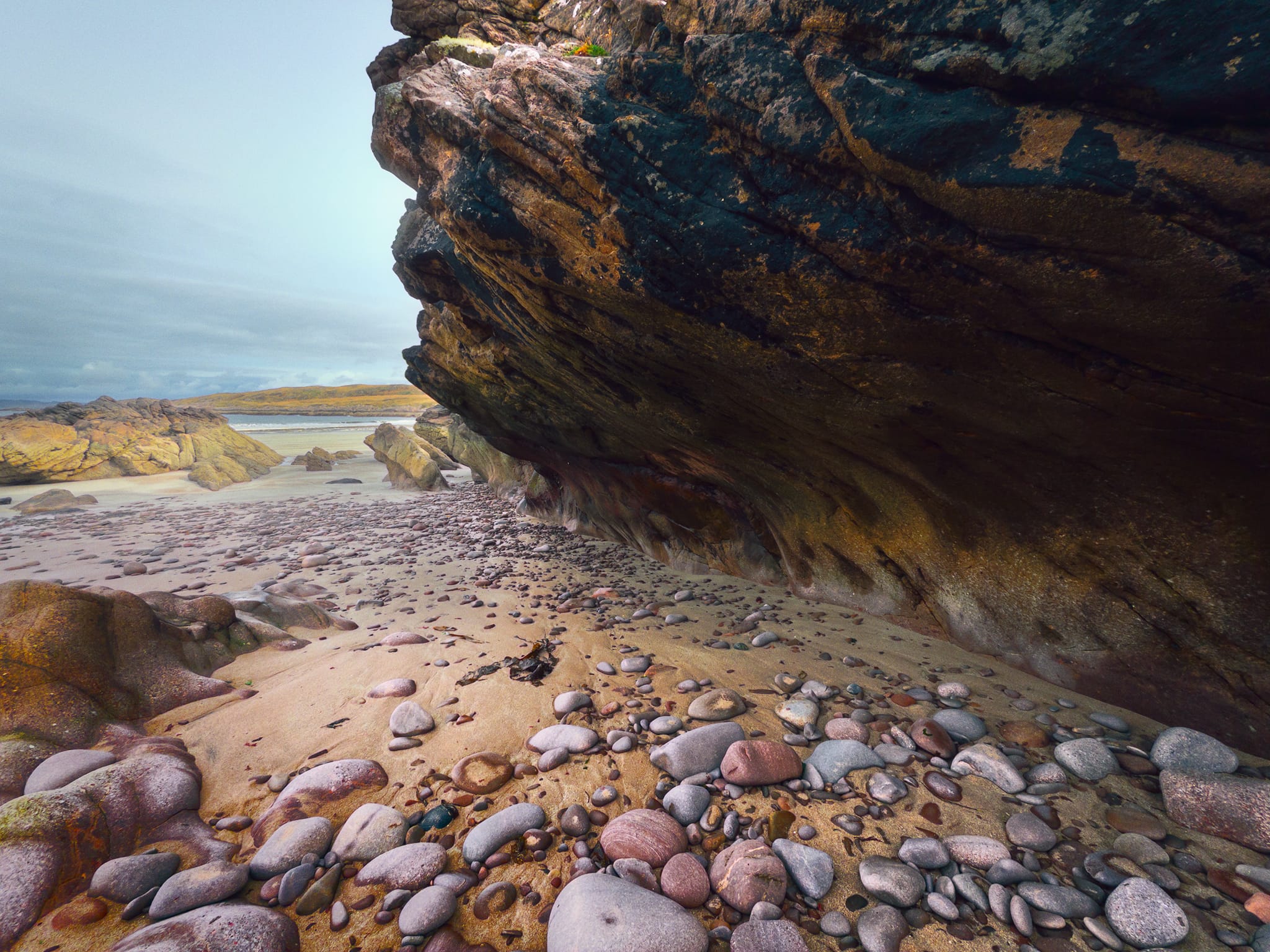
Down onto the pristine sand, I started slowly stalking my way around the various coves and inlets of the bay, gawping at all the rock formations. Getting down low to the sand with the ultra-wide lens allowed me to capture the full sweep of the enormous sandstone overhang, its layered underside curving dramatically across the frame. From that perspective, the rock almost seems to roll overhead, its ancient sedimentary structures echoing the movement of the sea that may have helped shape it.
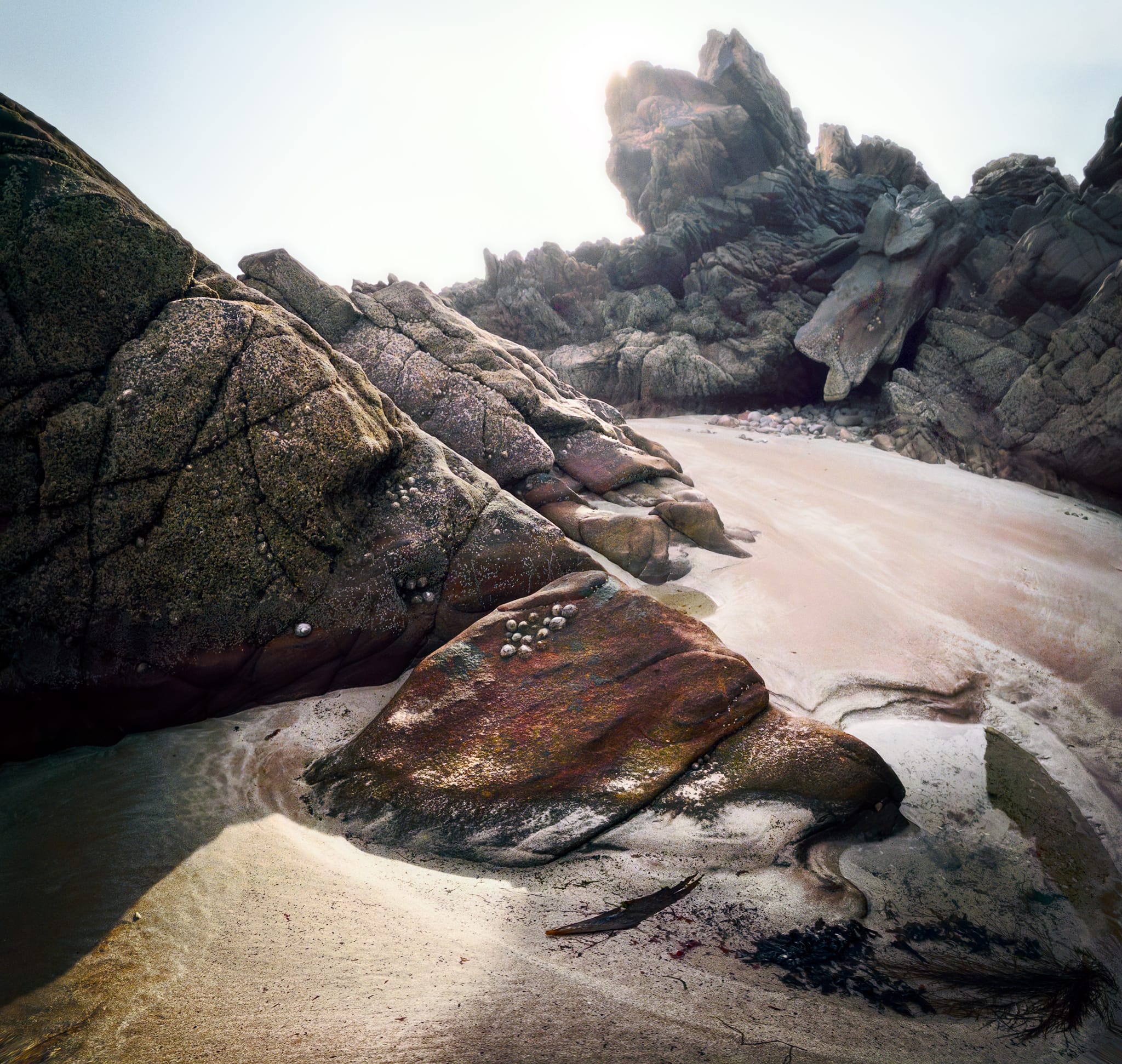
Three landscape images on the main lens, stacked top to bottom, gave this full view within one of the many little coves of Achnahaird’s western shoreline. I positioned the rising crag around a brief burst of sunlight, giving me lovely shadow and light contrast to play with.
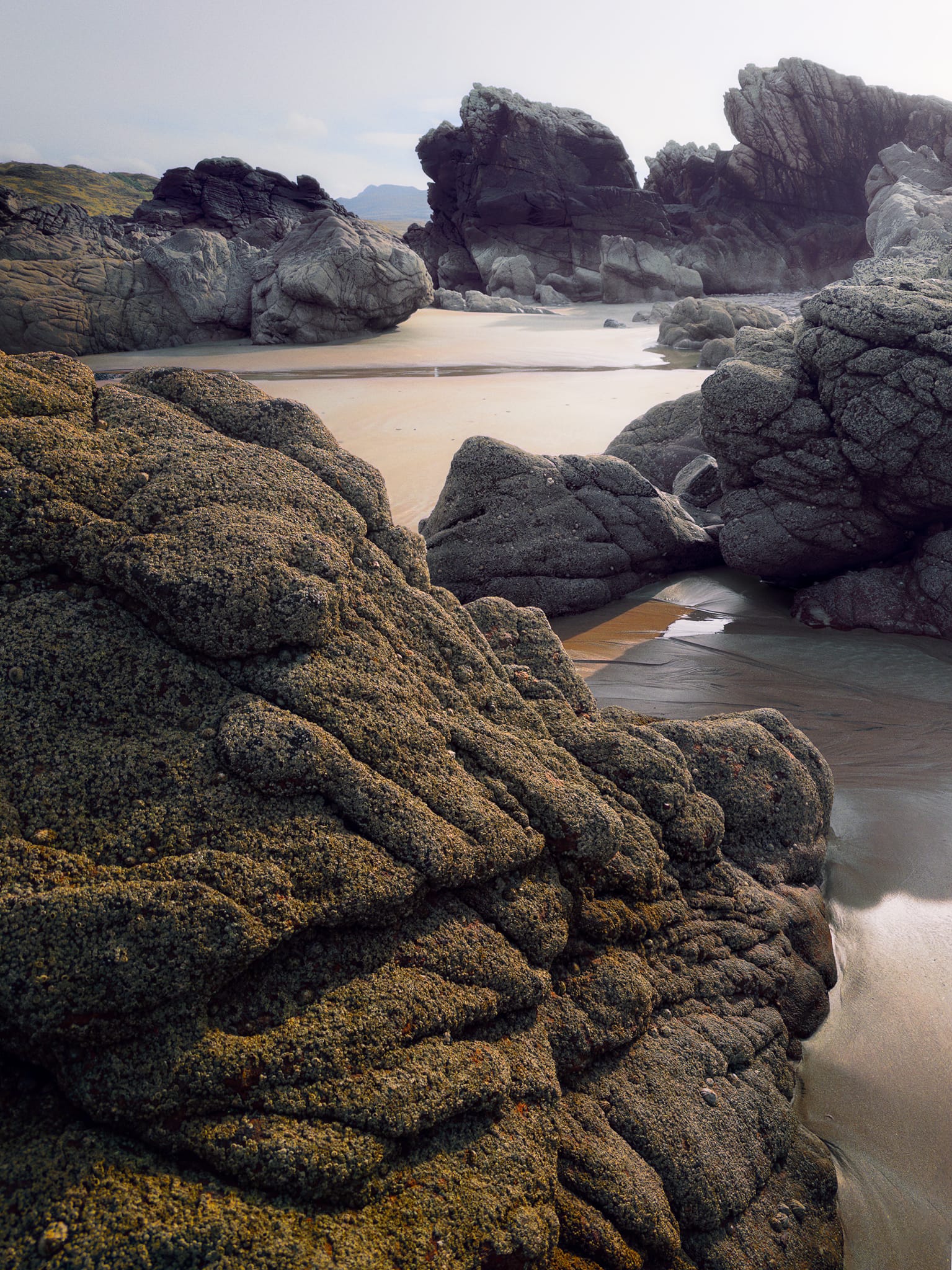
I was mesmerised by the contrast between the beautifully pristine and smooth sand against the wonderfully gnarled sandstone formations. I framed this image so you could just make out Speireag in the far distance, framed between two stacks.
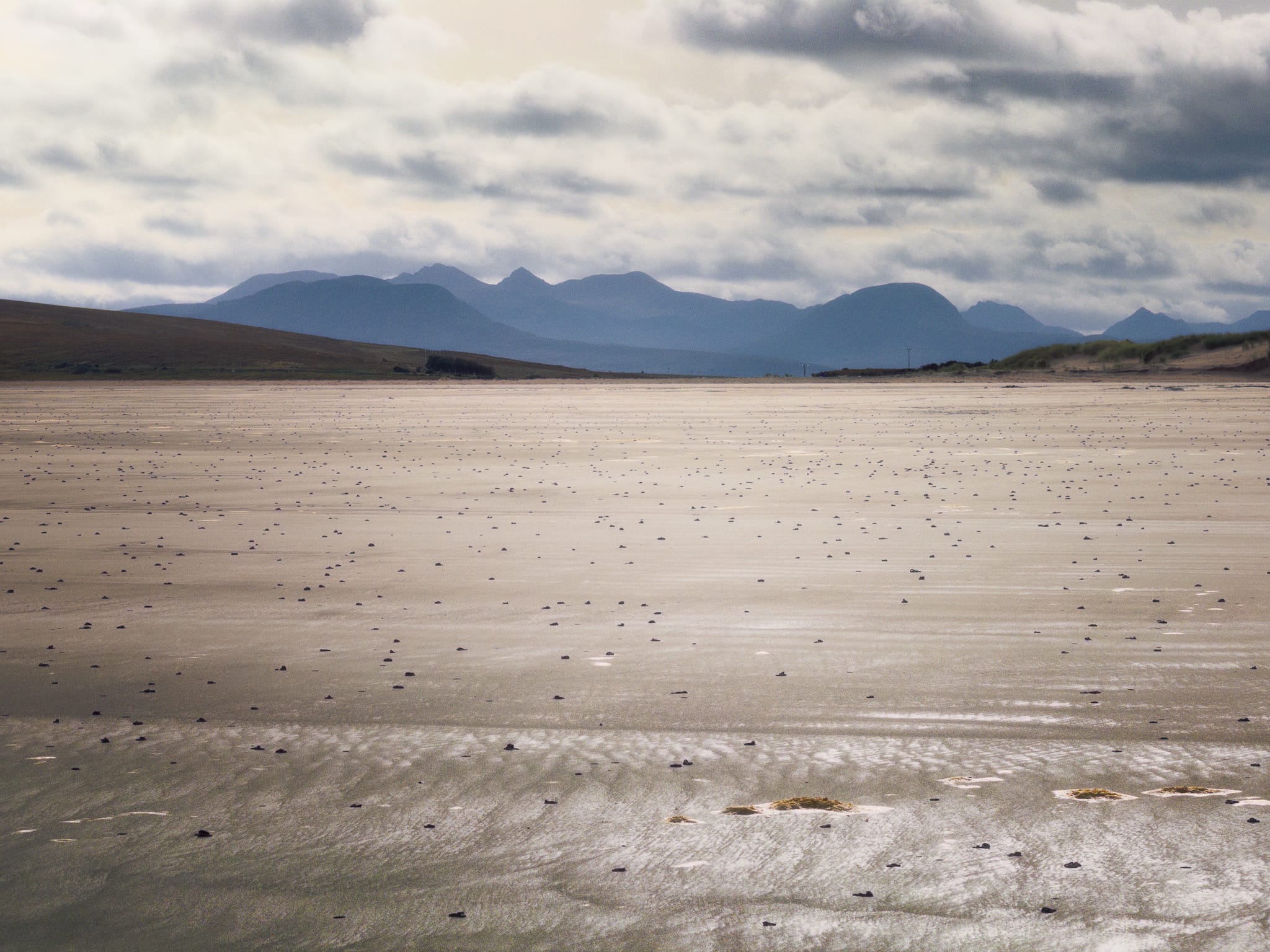
Out onto the main expanse of sand at Achnahaird Bay, the clouds starting to close in. In the far distance, looking south, is the unmistakeable profile of An Teallach.
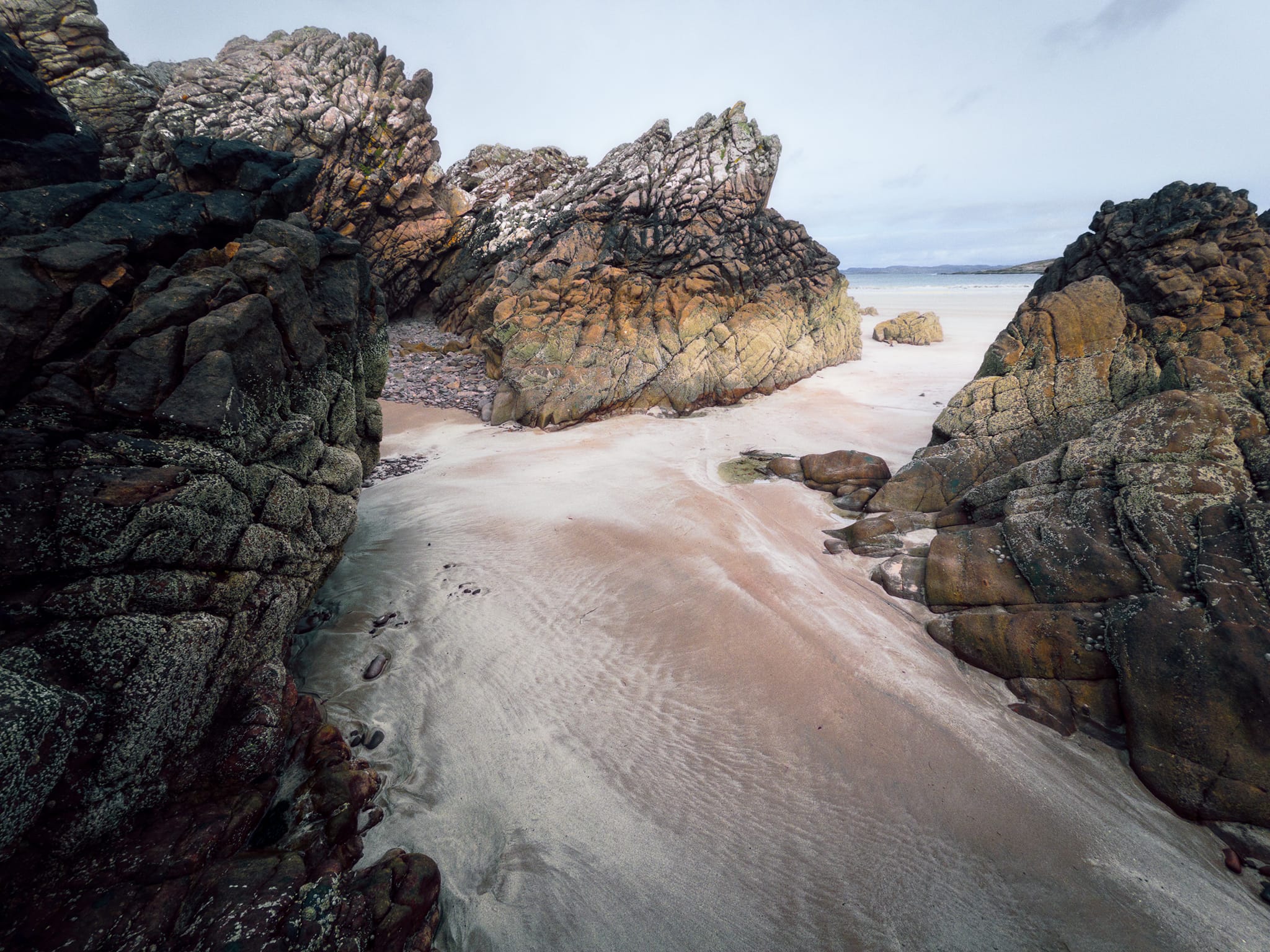
Back on the western shore, closely spaced diagonal seams cross steeper cracks and divided these rock face into craggy blocks. Sand has filled the wider gaps, and rounded shingle has collected in the recess to the left.
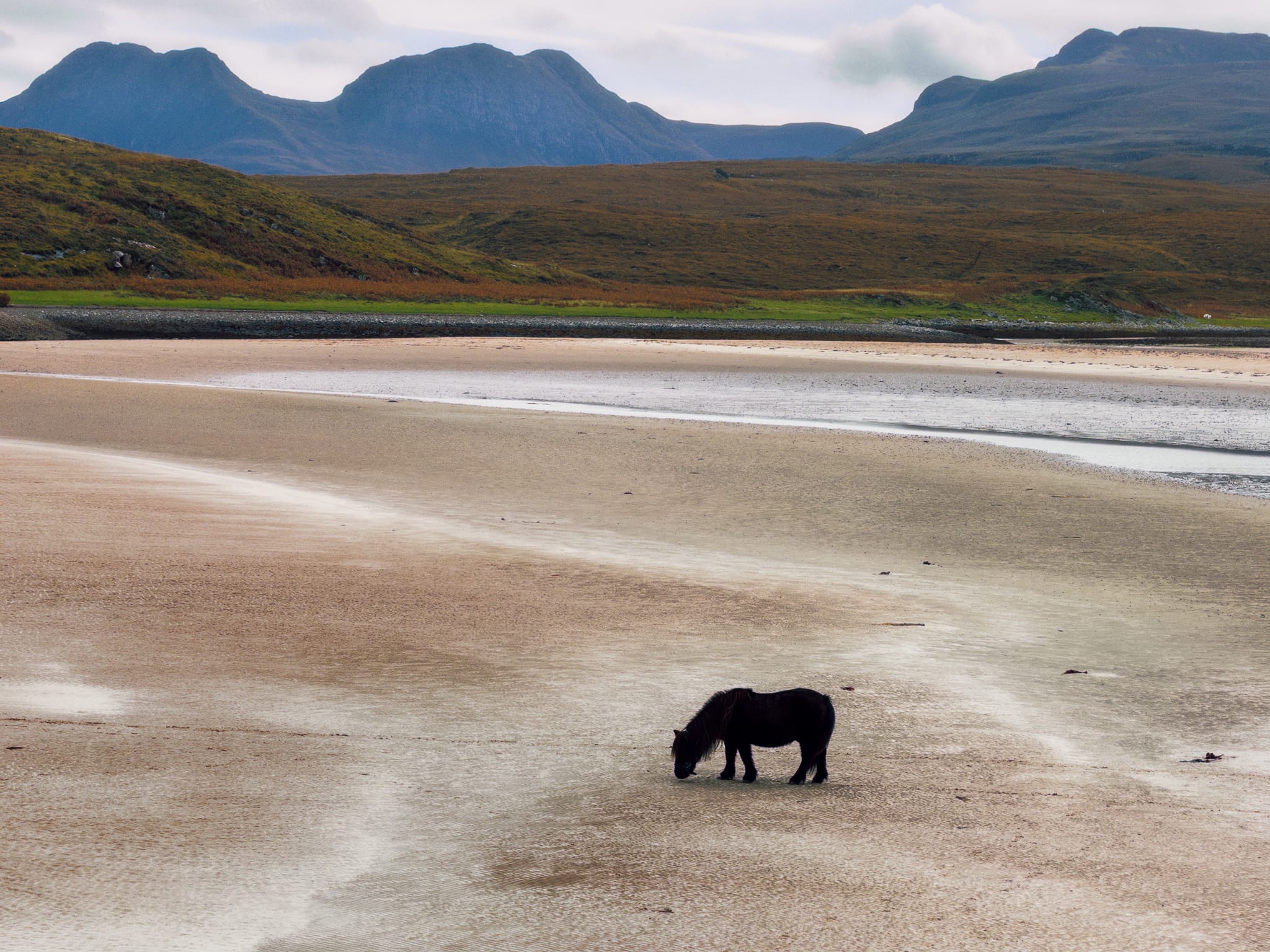
Up on the clifftops again, we spotted a local lass enjoying a stroll with two ponies, one of whom had no issues meandering on its own. This gave me a zoomed in composition, isolating the dark pony in the expansive bay with the Coigach mountains rising in the distance.