I’m back from the Assynt and Coigach area of the far northwest of the Scottish Highlands.
An area I’ve dreamed of exploring for over decade. And words alone cannot describe the scenes, sights, and senses I experienced.
The mountain scenery in the Assynt and Coigach area is something else. Mountains in all manner of fantastical shapes rise inexplicably from rolling moorland, commanding your attention no matter where you are, their forms having a kind of optical gravity of their own.
To kick off all my new photography from this area, I’ve made a series of images from the Inverpolly area of Coigach, taken over the course of several days.
These images feature some of the area’s most famous mountains, such as the iconic Stac Pollaidh, Ben Mor Coigach, Cùl Beag, and Cùl Mòr.
Conditions varied from stormy with 70+ mph winds to calm and sunny. In this part of the Scottish Highlands, forecasts walk away dejectedly and you’re very much left to battle the elements as you find them.
All photos taken on my iPhone 17 Pro Max. RAWs developed in Lightroom, then edited and finalised in Photoshop.
Inverpolly of Coigach, Assynt & Coigach, Scotland, Autumn © 2026 by Ian Cylkowski is licensed under CC BY-NC-SA 4.0.
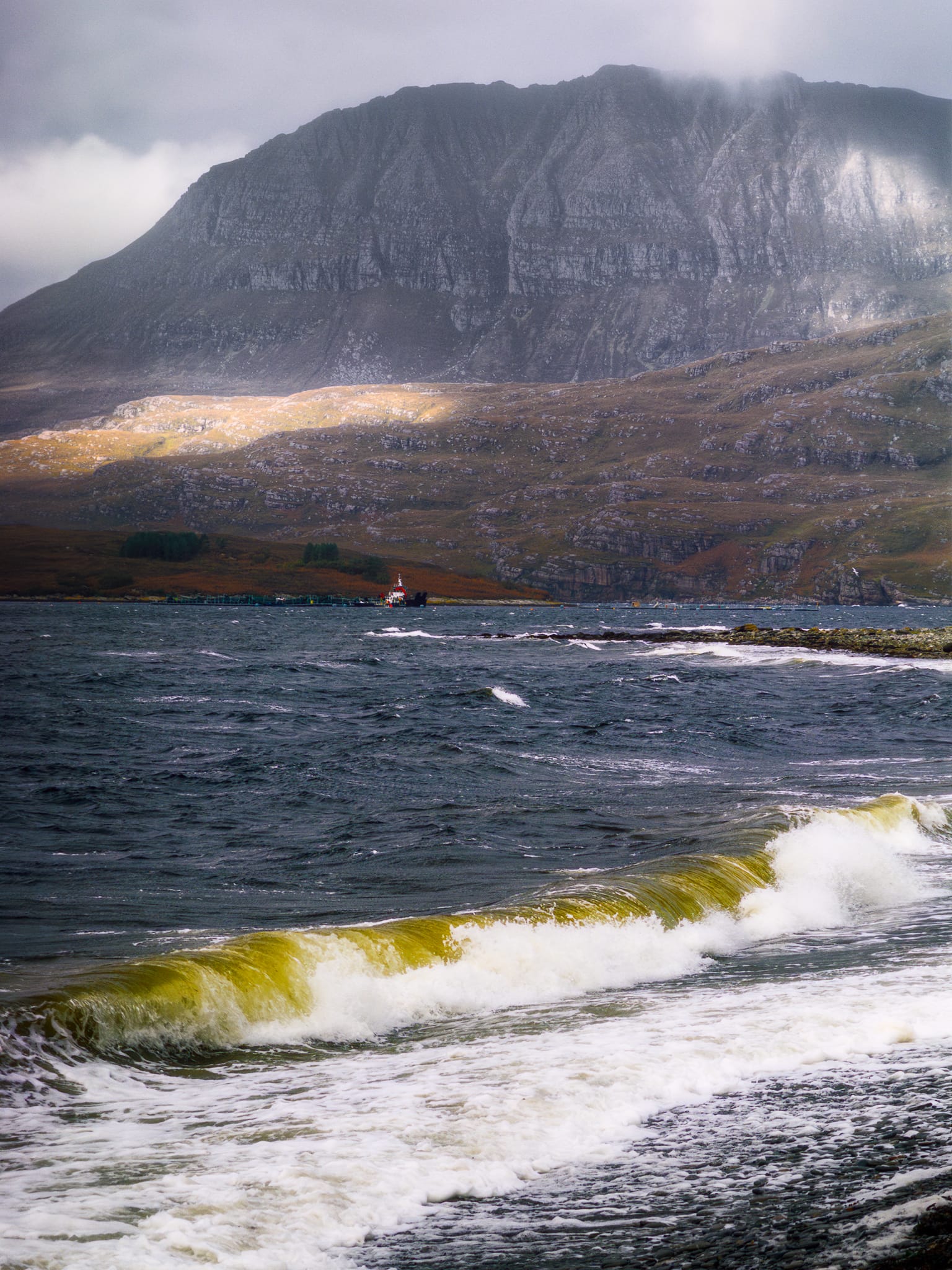
On the way to the Inverpolly area, north of Ullapool, there’s a small bit of coastline called Ardmair and it offers a stonking taster of what’s to come. Across Loch Canaird, Ben Mor Coigach (743 m/2,438 ft) presents as a sheer wall rising straight out of the sea. We stopped for photos as we battled the powerful gusts in the storm.
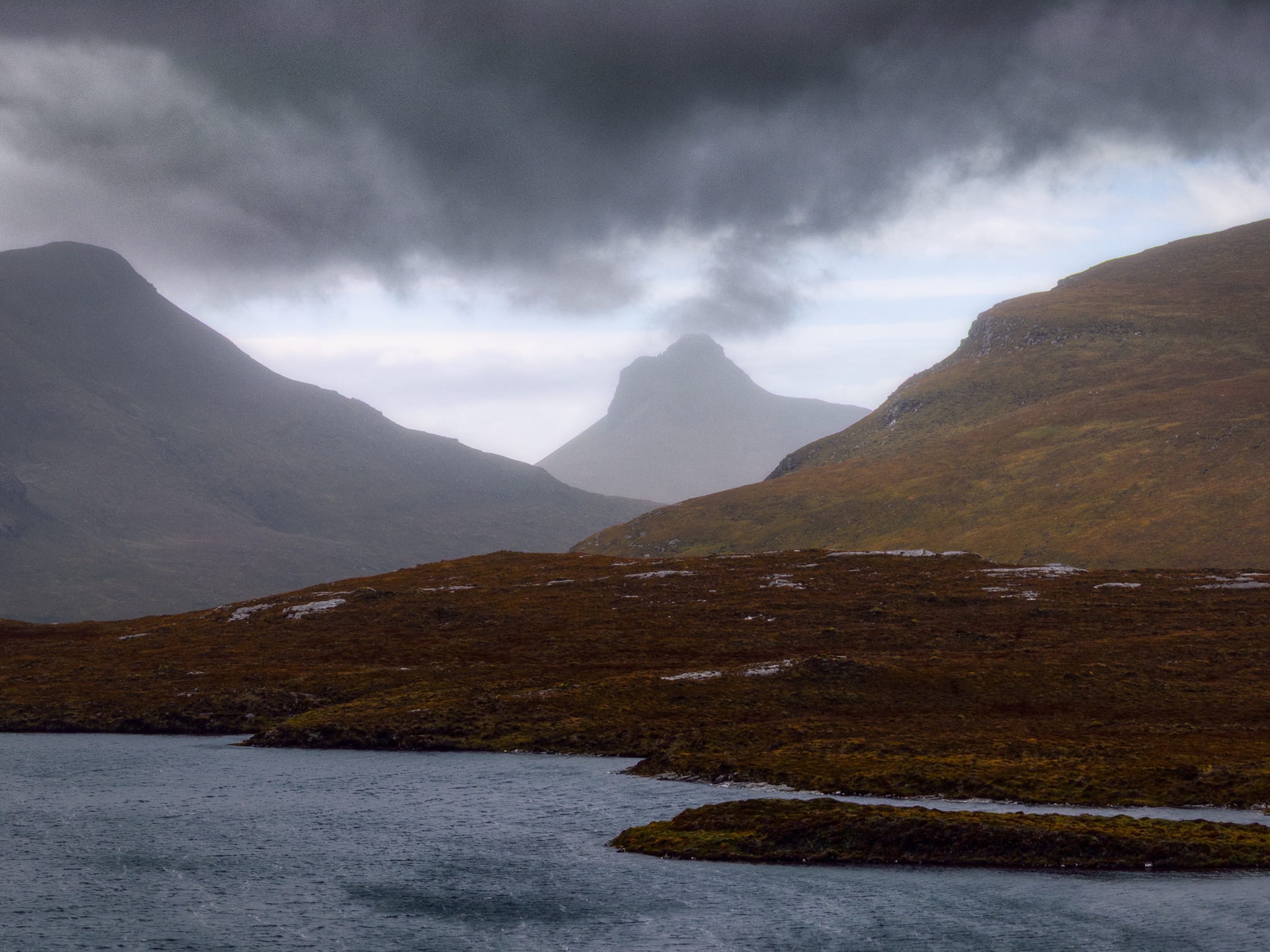
At the Knockan Crag Nature Reserve we take in the glorious sight across Lochan an Ais of Stac Pollaidh (612.4 m/2,009 ft), framed between the shoulders of Cùl Beag, (769 m/2,523 ft) and Cùl Mòr (849 m/2,785 ft). The driving storm clouds give Stac Pollaidh the impression that it’s a volcano spewing ash into the sky.
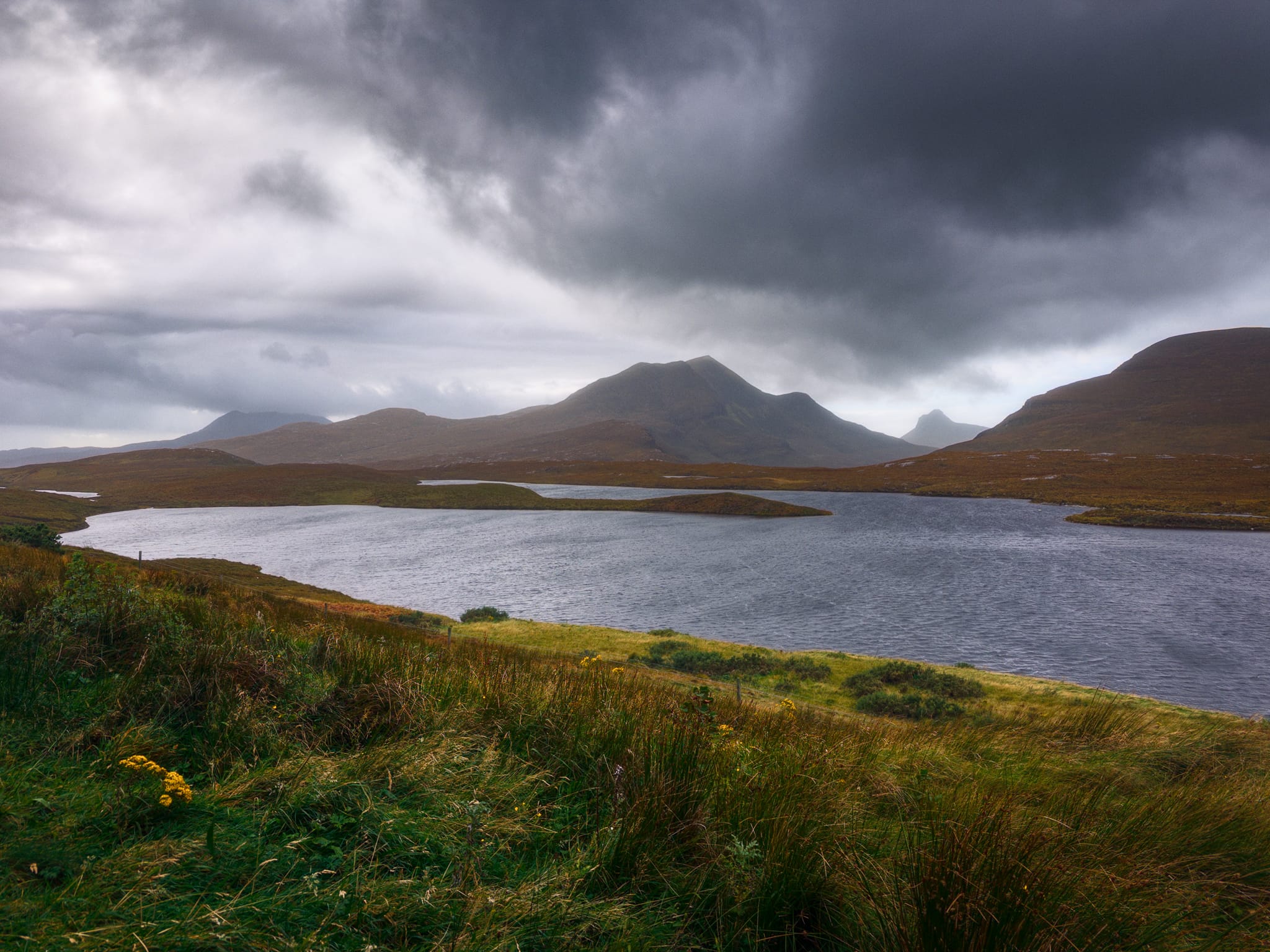
A wider composition from the same vantage point. I really tried to give this photo the impression of everything being battered by the storm’s winds; grass swaying wildly, ripples racing across the lochan, and mobile clouds crashing into each other.
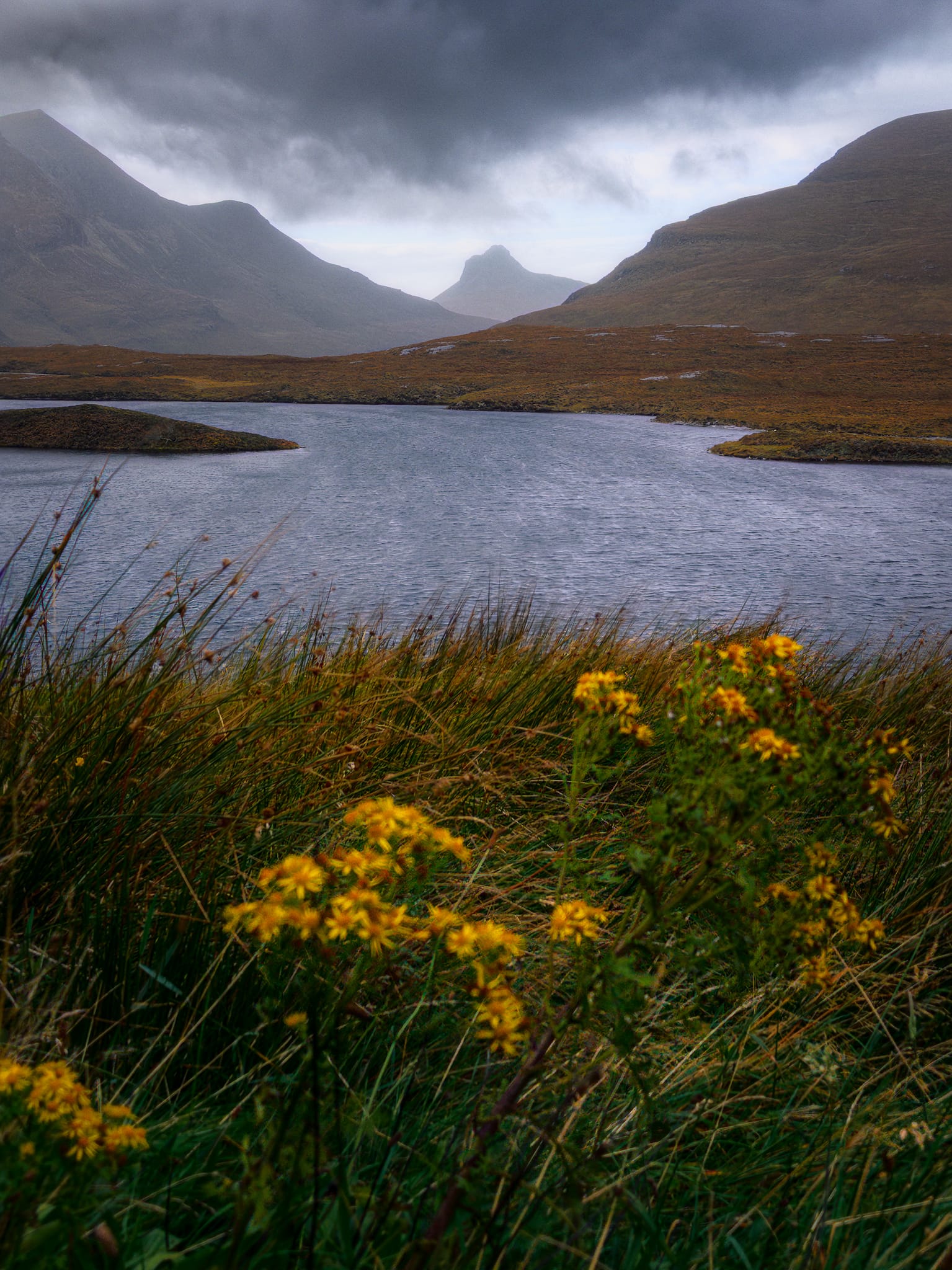
Another composition featuring Stac Pollaidh across the lochan, this time with some Common Ragwort (Jacobaea vulgaris) in the foreground swaying violently in the winds.
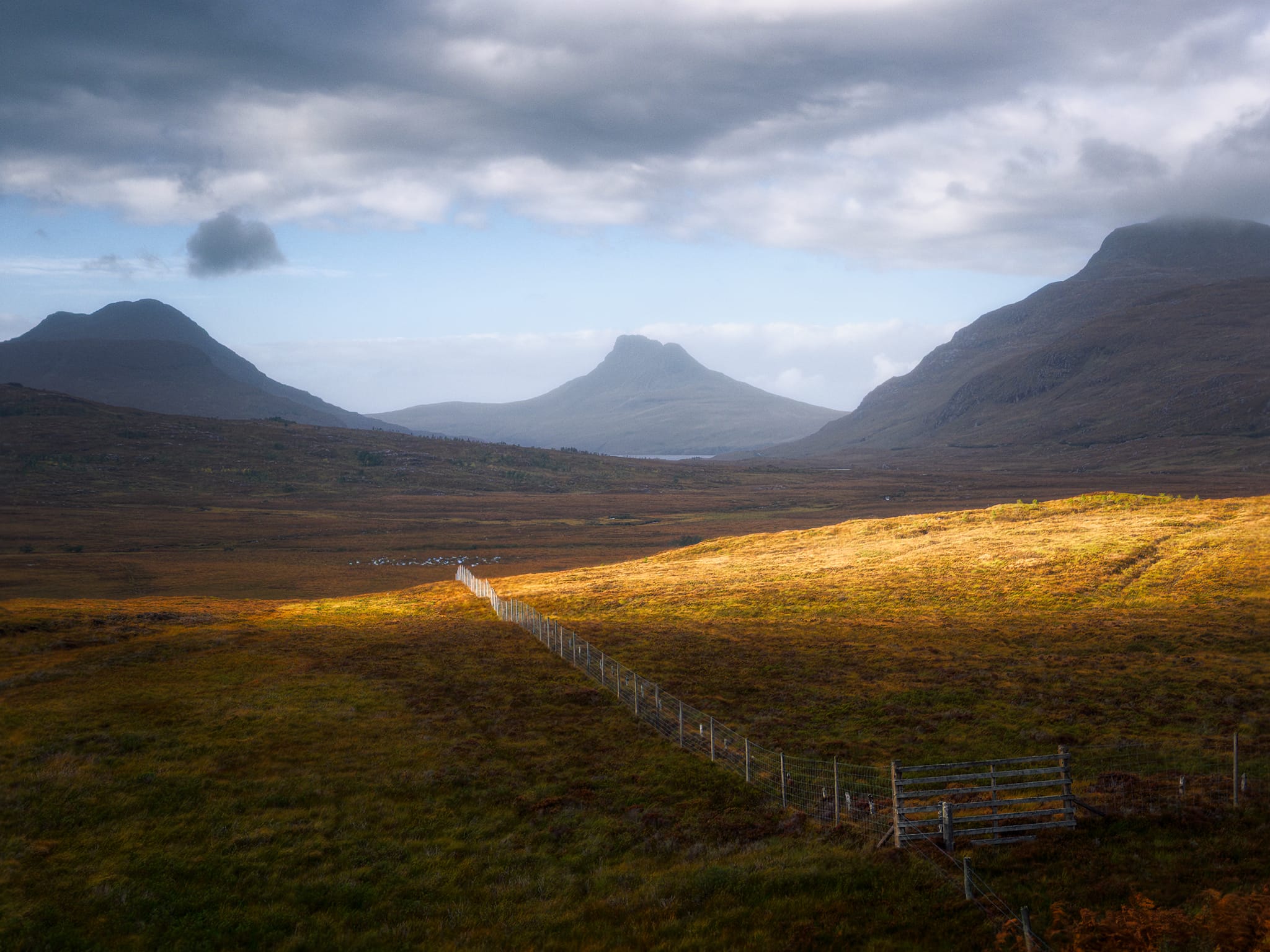
South of Knockan Crag, we stopped for more compositions at the Coigach Geopod. A gap in the racing clouds let slithers of golden light race across the landscape. I positioned my composition using the fencing as a leading line and waited for the light to best pick out the lay of the land. Stac Pollaidh once again sits in the middle, but this time its compositional neighbours are Cùl Beag on the right and Beinn Tarsuinn on the left, itself part of the Ben More Coigach ridge.
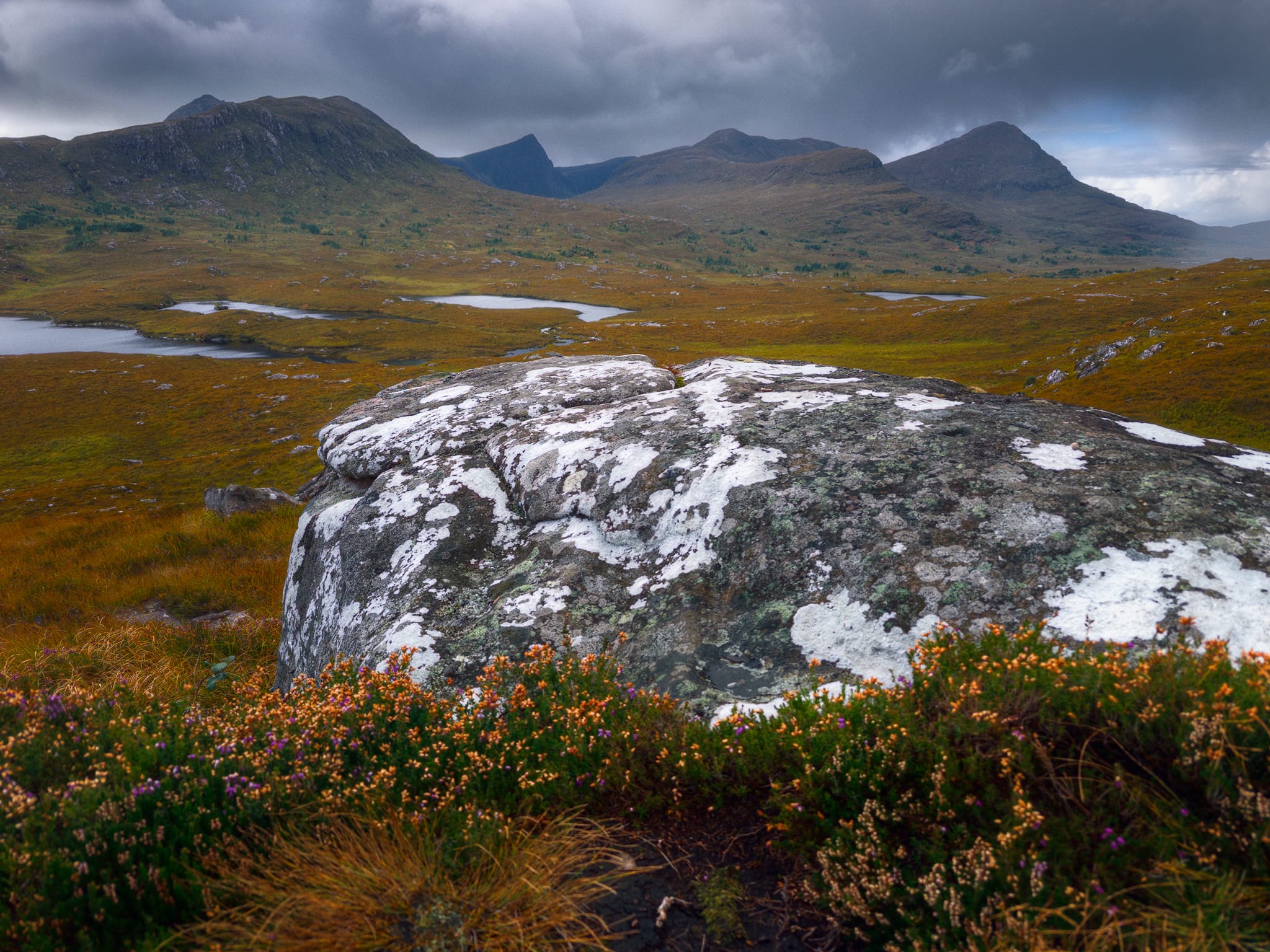
On another day we ventured off the main A835 road and took the minor road that travels underneath Cùl Beag and Stac Pollaidh. Conditions were initially, again, stormy. Along the single track road, a small layby was connected to a series of Torridonian sandstone outcrops that I had to stop at and play around for compositions. Here, I got tight and low with a lichen-covered boulder, framed above with the fantastic peaks of Ben More Coigach. Left is Beinn Tarsuinn, then the distant and astonishing pyramidal profile of Sgùrr an Fhidhleir. Centre-right is the smaller Cìoch Beinn an Eòin and right is Sgòrr Tuath.
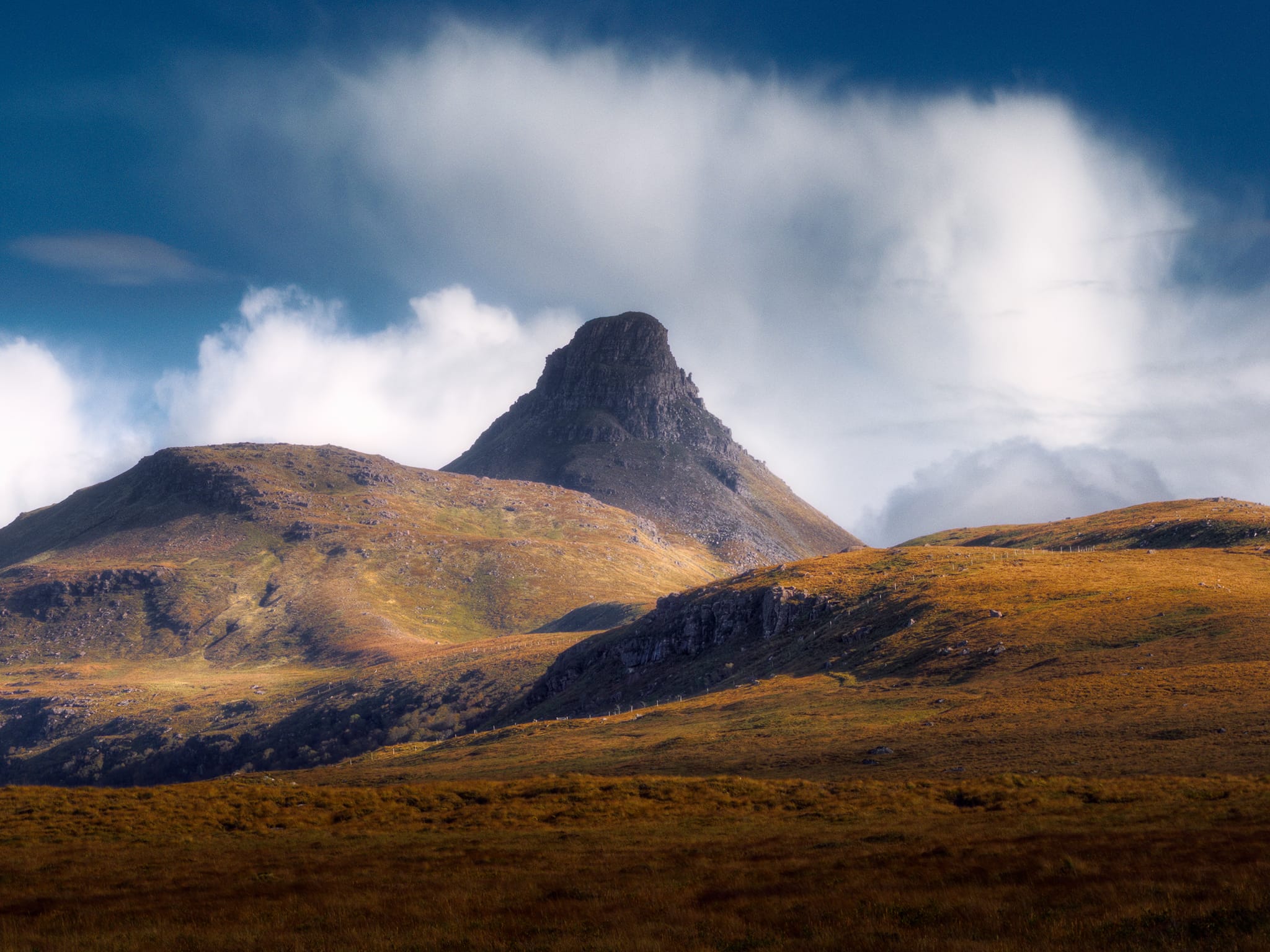
Further along the road the clouds were finally starting to move on. We drove past Loch Lurgainn then Loch Bad a’ Ghaill, taking the road at Badnagyle up and onto the moorland between Stac Pollaidh and Loch Garvie. It was here that I got my first side-profile view of Stac Pollaidh, looking like a slender pyramid topped with crags and pinnacles. The clouds broke apart and raced away, allowing light to pick out the beautiful contours of the landscape as I lined up this zoomed in composition of what was quickly becoming one of my favourite mountains.
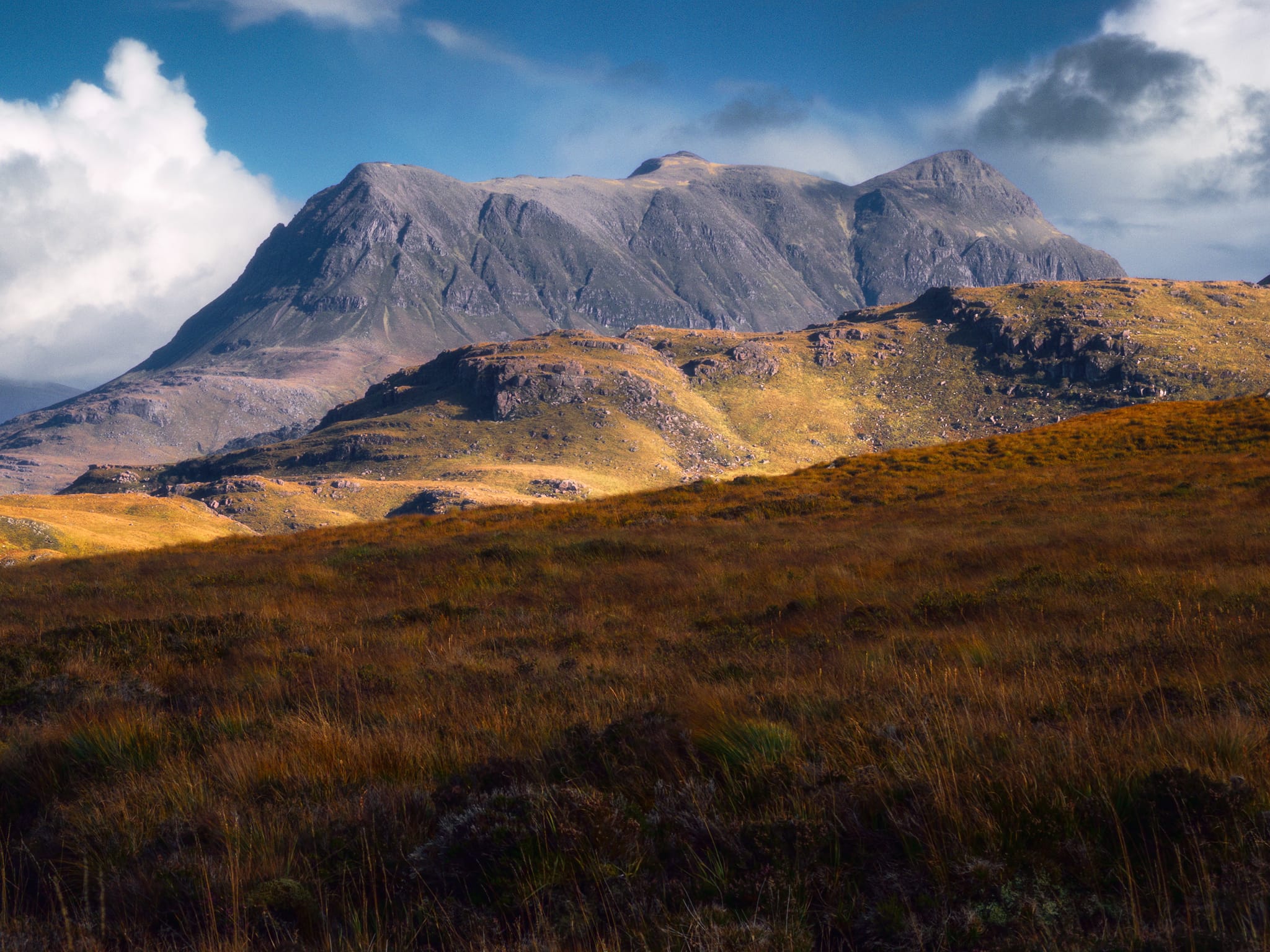
Staying zoomed in, I waited for the light to specifically highlight the distant mountain of Cùl Mòr and its western profile, the shoulder of Stac Pollaidh providing the middle ground.
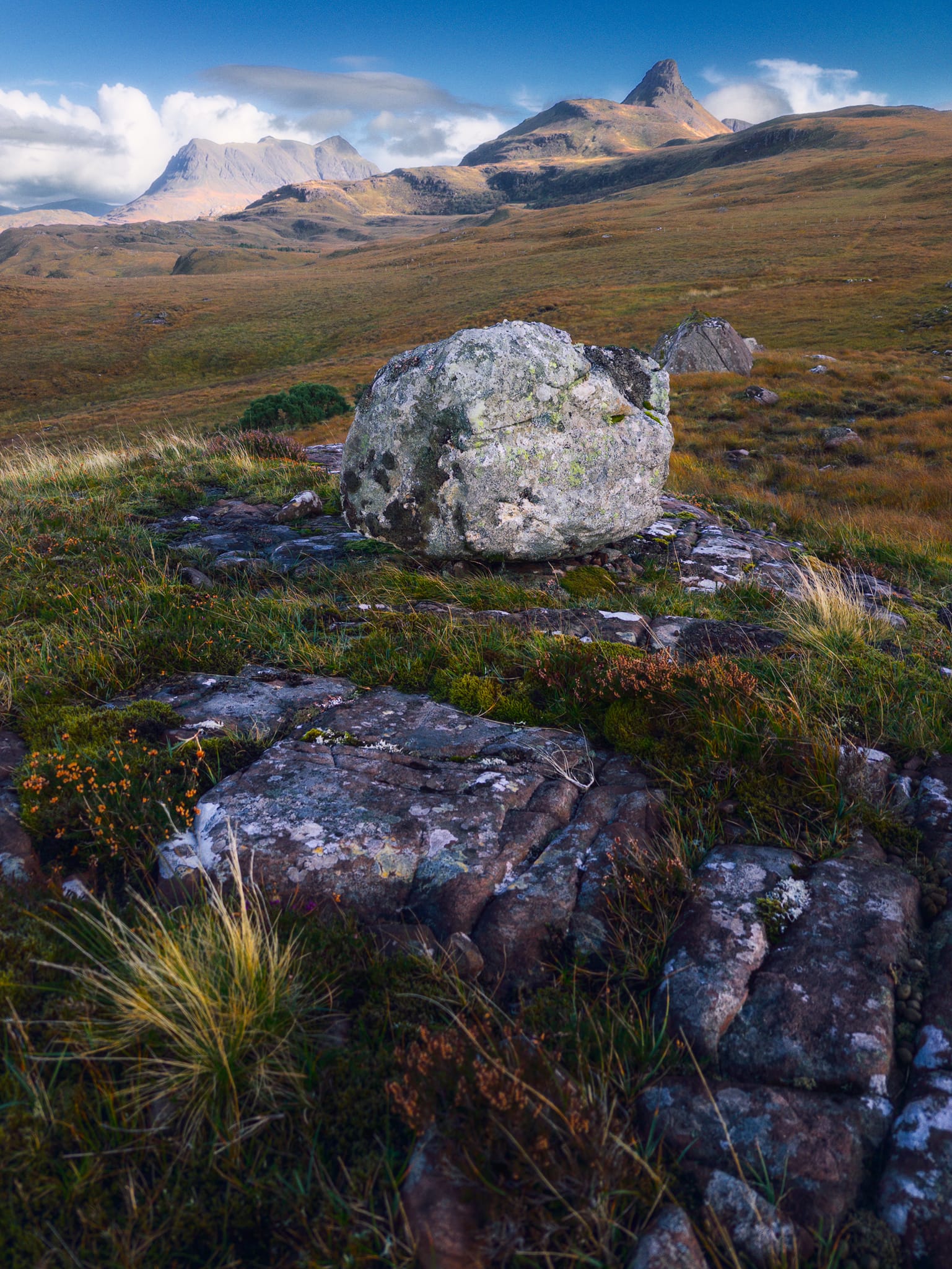
I knew on the moorland of Druim Bad a’ Ghaill that there were various sandstone outcrops with glacial erratics perched on them. I just didn’t know where specifically. Thankfully, from near the power generator we parked near, I sighted a lone boulder perched on a platform further down the road. After some squelching and slipping, I found my composition that also happily included Stac Pollaidh and Cùl Mòr.
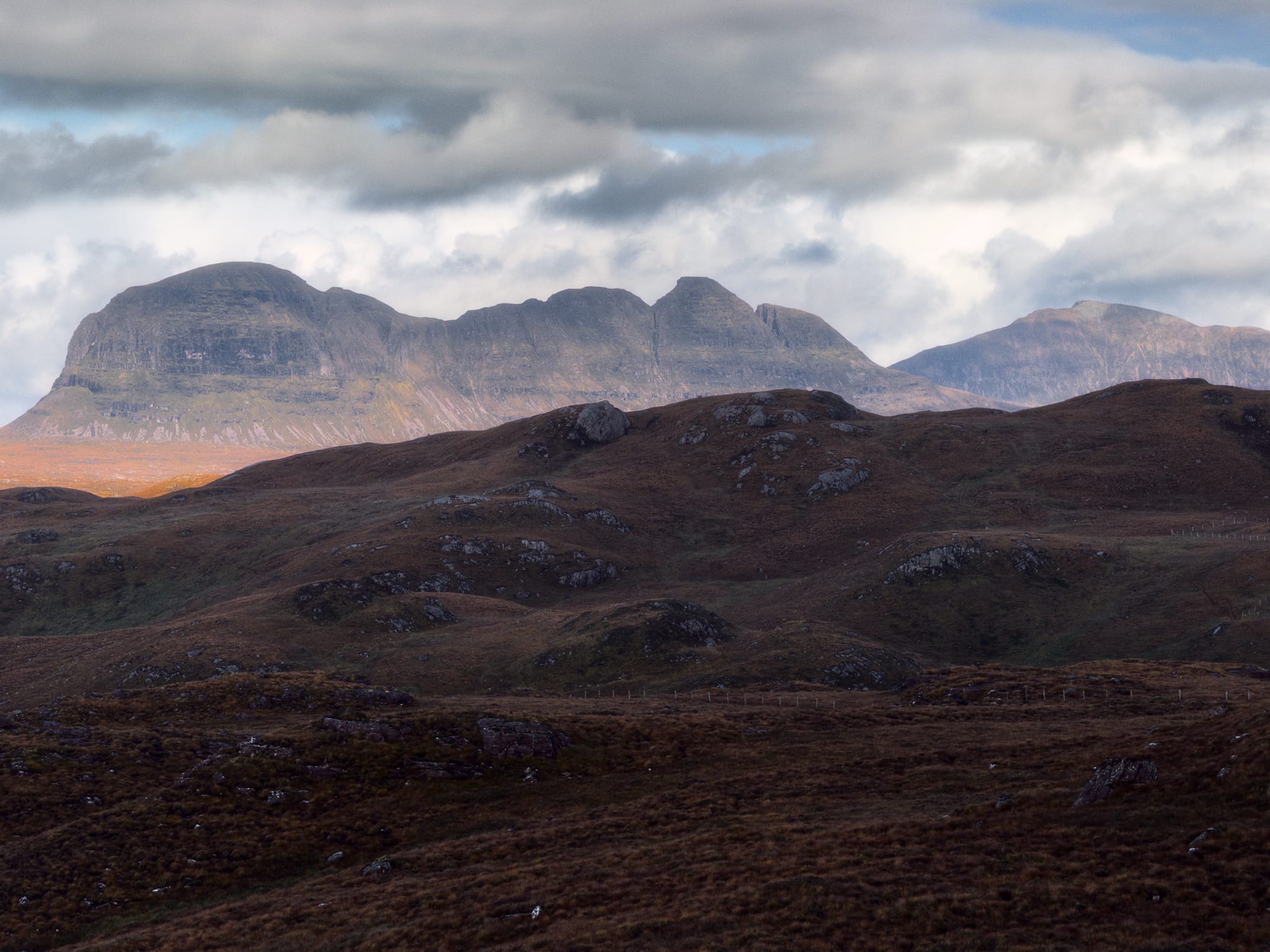
It was also at this location that I got my first view of the incredible Suilven, an isolated fin of a mountain. Again I zoomed in and waited for the light to move on from the nearby moorland to highlight just the mountain.
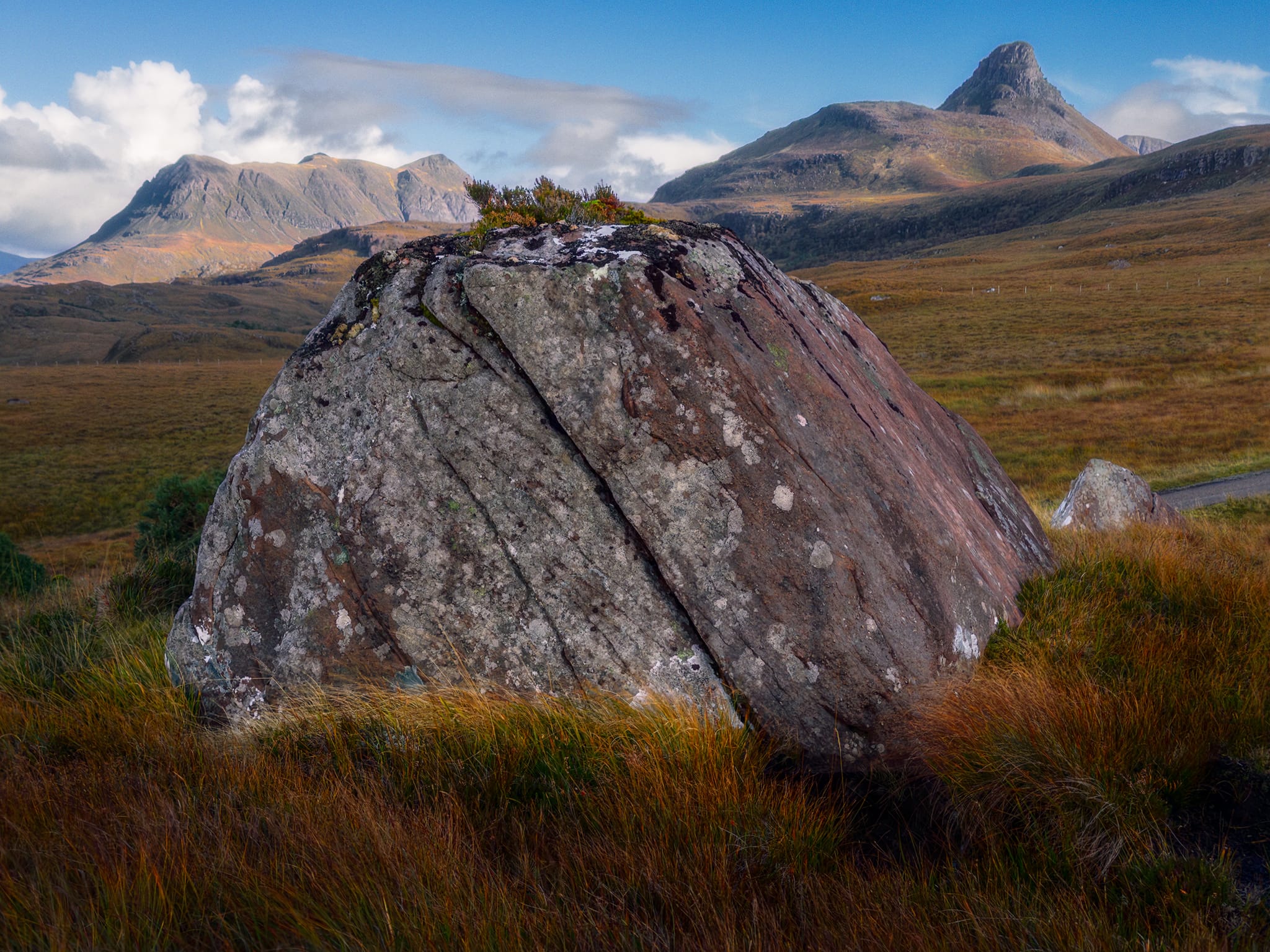
Below my solitary perched boulder, a large one embedded in the grass provided another composition for me. I used its hulking mass and shape as a leading line and separator between the distance mountains of Stac Pollaidh and Cùl Mòr.
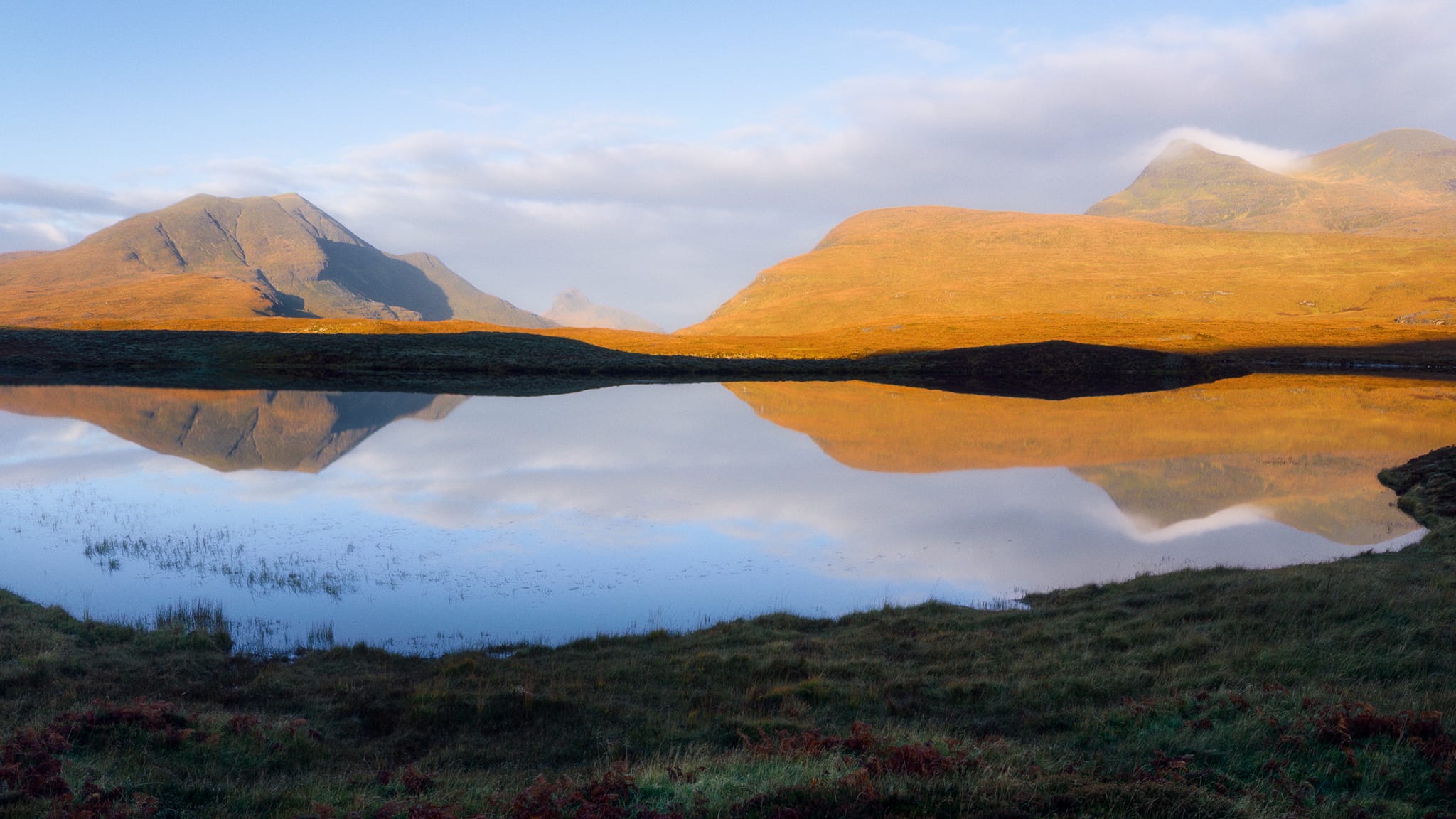
On another day, heading towards Lochinver one early morning, we hurriedly stopped at one of the A835’s many parking areas as our eyes caught a glimpse of perfect reflections. Here, across a still Lochan an Ais, the rising sun drenched Stac Pollaidh, Cùl Beag, and Cùl Mòr in beautiful autumnal orange. A scene I’ll never forget.